
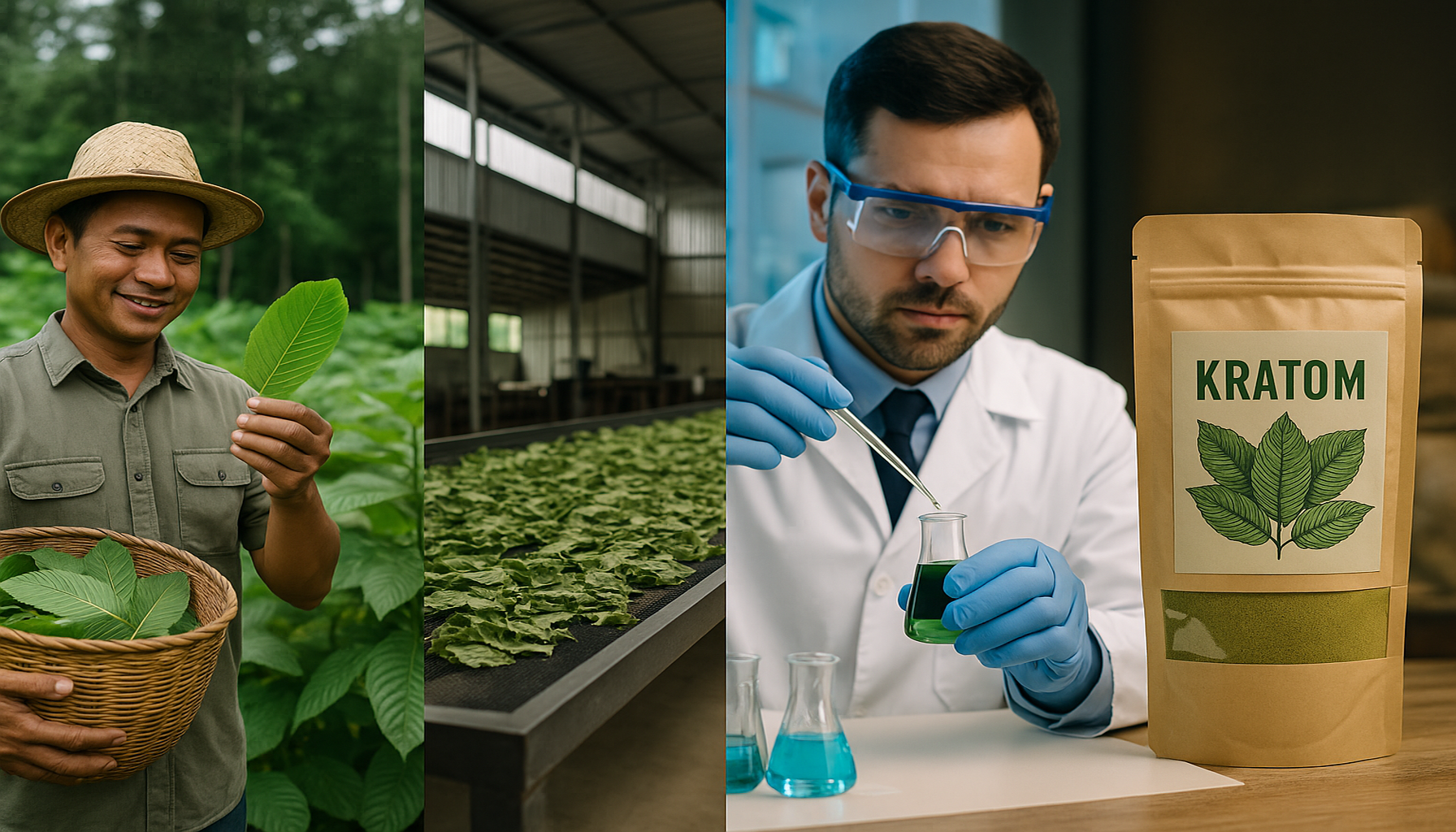
From Farm to Lab: A Transparent and Efficient Kratom Supply Chain
As kratom (Mitragyna speciosa) continues to gain recognition in the global wellness market, the demand for quality, safety, and transparency in its supply chain is more important than ever. Indonesia, as the world’s largest producer of kratom, is leading a transformation in how this herbal commodity moves from farm to international markets.
1. Cultivation: Where Quality Begins
The journey of kratom starts in the fertile lands of Indonesia — particularly in regions like West Kalimantan and Aceh, where the soil and climate provide optimal growing conditions. Unlike mass agriculture, most kratom farms are still small-scale, family-owned operations. This allows for careful attention to each plant and sustainable harvesting practices.
Farmers play a vital role in determining leaf quality. They monitor the age of the tree, the time of harvest, and even the weather conditions, all of which can affect the alkaloid content of the leaves — the key compound that gives kratom its unique properties.
2. Harvesting and Drying: Preserving Potency
Once mature leaves are picked, they must be dried properly to preserve potency and prevent mold or contamination. There are several drying techniques used by producers:
- Indoor drying with controlled temperature and humidity
- Sun-drying for traditional processing
- UV-assisted drying for premium-grade kratom
Each method has its impact on color, texture, and alkaloid concentration, making this step crucial in defining the final product type (such as red vein, white vein, or green vein kratom).
3. Processing: Clean, Safe, and Standardized
After drying, kratom leaves are ground into fine powder. At this stage, hygiene and cleanliness are key. Modern kratom processing facilities use stainless steel machines, HEPA filters, and sterilization rooms to ensure that the product remains pure and safe.
Some facilities go even further by applying:
- Metal detection
- Microbial testing
- Alkaloid profile analysis
These steps help guarantee that each batch is free from harmful substances and meets the standards required by international buyers.
4. Laboratory Testing: Building Consumer Trust
Before kratom can be exported, it must pass through laboratory testing — an essential step for transparency and trust. Certified labs analyze samples for:
- Microbial contamination (E. coli, salmonella, etc.)
- Heavy metals (lead, mercury, arsenic)
- Alkaloid content (mitragynine, 7-hydroxymitragynine)
- Mold and yeast presence
Buyers and importers in countries like the U.S. often request these test results before placing large orders, making lab verification a must-have in the kratom industry.
5. Packaging and Export: Final Steps Toward Global Markets
The final product is then sealed in airtight, food-grade packaging with clear labeling — often including batch numbers and QR codes for traceability. This level of detail is appreciated by international wholesalers and retailers, especially in countries with strict import regulations.
From here, kratom is shipped via certified freight services, often accompanied by export documents such as:
- Certificate of Origin
- Laboratory Certificate
- Phytosanitary Certificate
- Customs Declarations

Add comment