
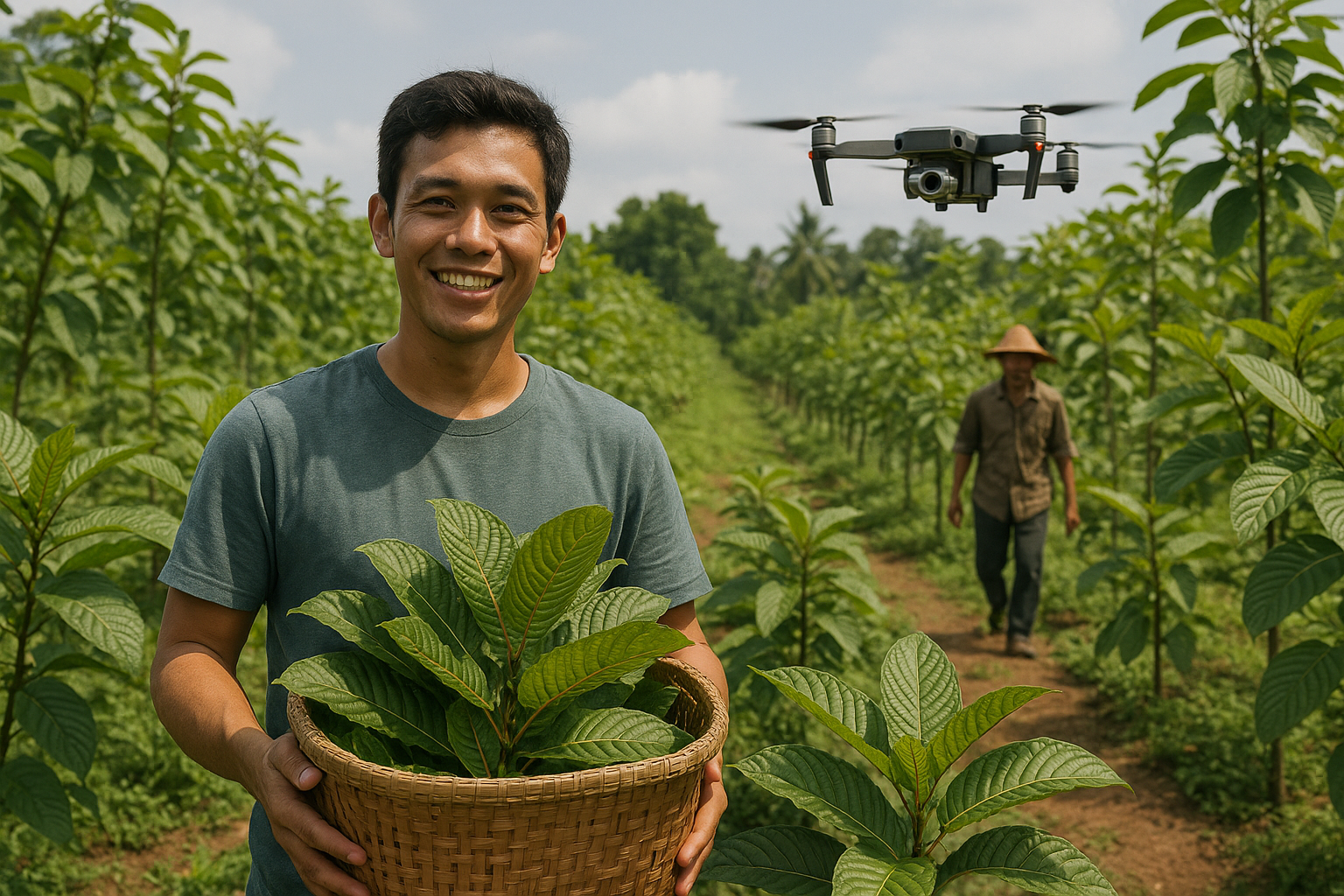
Boosting Kratom Production Through Technology and Innovation
Kratom (Mitragyna speciosa) has gained increasing attention in various regions of Indonesia due to its potential as a high-value export commodity. However, to stay competitive in the global market and meet the growing demand, farmers and kratom industry players need to leverage technology and innovation to improve productivity and product quality.
Challenges in Traditional Kratom Cultivation
Traditional kratom production still faces several challenges, such as:
- Lack of standardized cultivation practices
- Limited knowledge of proper fertilization and plant care
- Manual harvesting and drying processes prone to contamination
- Inconsistent product quality
These issues can negatively impact the market value of kratom and limit export opportunities.
The Role of Technology in Kratom Farming
Modern agricultural technology offers various solutions that can be applied to kratom cultivation, including:
1. Automated Drip Irrigation
Drip irrigation systems integrated with soil moisture sensors help deliver water precisely, reduce waste, and ensure optimal plant growth.
2. Digital Plant Monitoring
IoT-based applications allow farmers to monitor kratom plantations in real-time—tracking temperature, humidity, and soil conditions. This data supports timely and accurate decision-making.
3. Drone Utilization
Drones can be used for land mapping, plant health monitoring, and efficient spraying of organic fertilizers or pesticides over large areas.
4. Post-Harvest Technology
Innovations such as solar-powered dryers help speed up the drying process while preserving the alkaloid content in kratom leaves, resulting in higher quality products.
Innovation in Kratom Derivative Products
In addition to increasing raw leaf production, innovation is also needed in product diversification. Kratom leaves are now being processed into:
- Capsule powder
- Herbal tea
- High-concentration kratom extracts
These value-added products enhance Indonesia’s competitiveness in the global market.
Connecting Farmers with Technology
Improving kratom production isn’t just about machines and tools. Education and training are essential to help farmers adopt these technologies effectively. Collaboration between the government, research institutions, private sector, and farming communities is key to building a modern, sustainable kratom industry ecosystem.

Add comment